

What’s under the pavers matters most
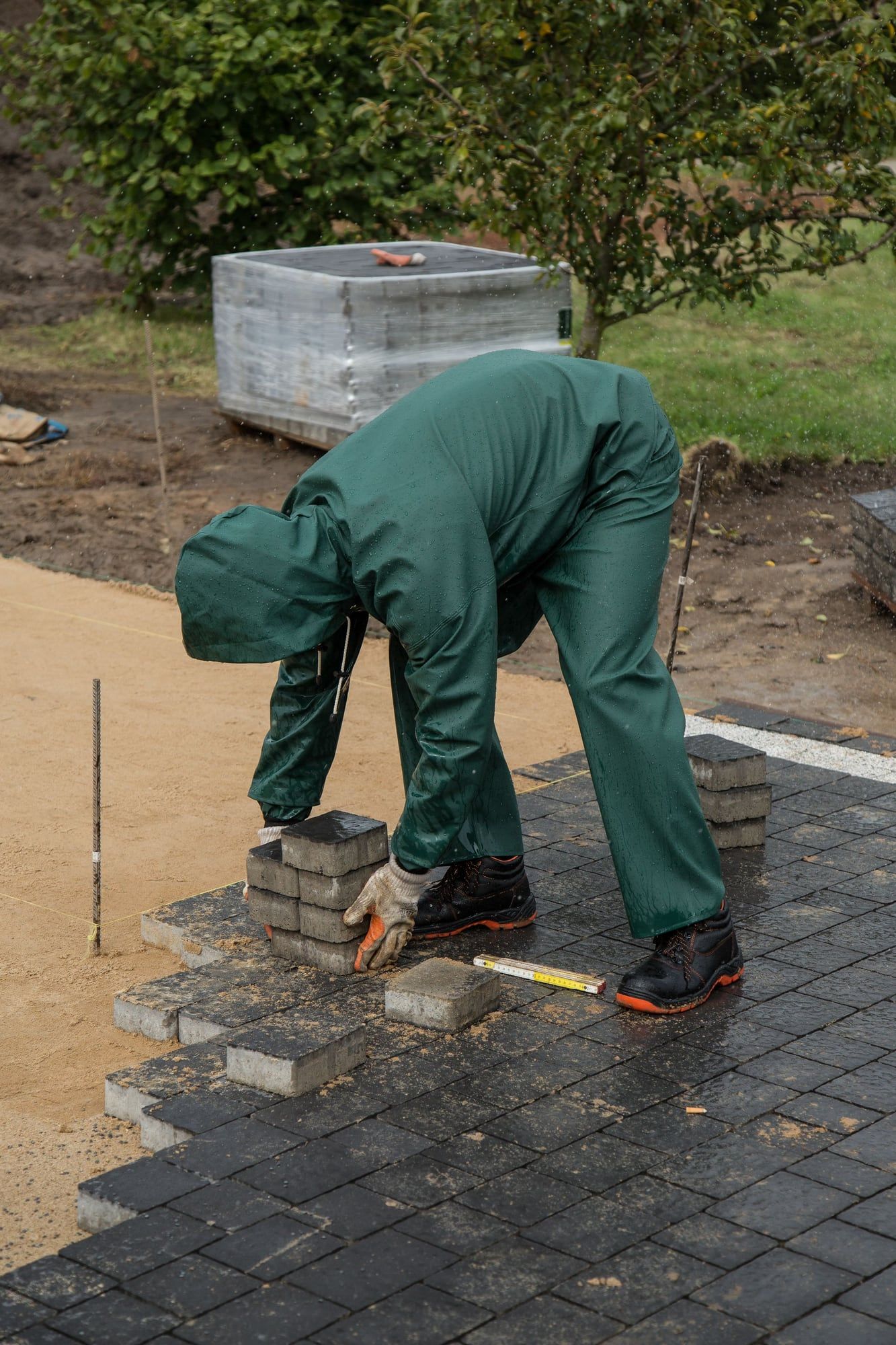
On a typical Naples project we remove the old driveway and dig out organic soil and roots until we reach stable ground. We then build up a crushed aggregate base, compacting it in layers with a plate compactor so it can carry SUVs, delivery trucks and the occasional moving van. A screeded layer of bedding sand goes on top, followed by the pavers, a solid edge restraint along every open side, and a final compaction pass that settles the pavers and locks the whole field together.
Golden Gate Estates and other older parts of Collier County bring their own challenges. Lots are large, driveways are often long, and the native soil is loose sand that shifts if it isn’t confined. Many of these homes also irrigate with well water, which can leave orange rust stains on light-colored pavers. We lay out the driveway so sprinkler heads don’t spray across it, and we can suggest color blends that hide minor staining between cleanings.
Where the driveway crosses the swale and meets the street, the work may fall within the county right-of-way. Collier County or your local jurisdiction may require a permit for that apron, and the culvert or swale has to keep draining after we finish. We’ll tell you during the estimate whether your project needs a permit and take care of that paperwork where required, so the inspection doesn’t become a surprise halfway through the job.